
Civic Explainer
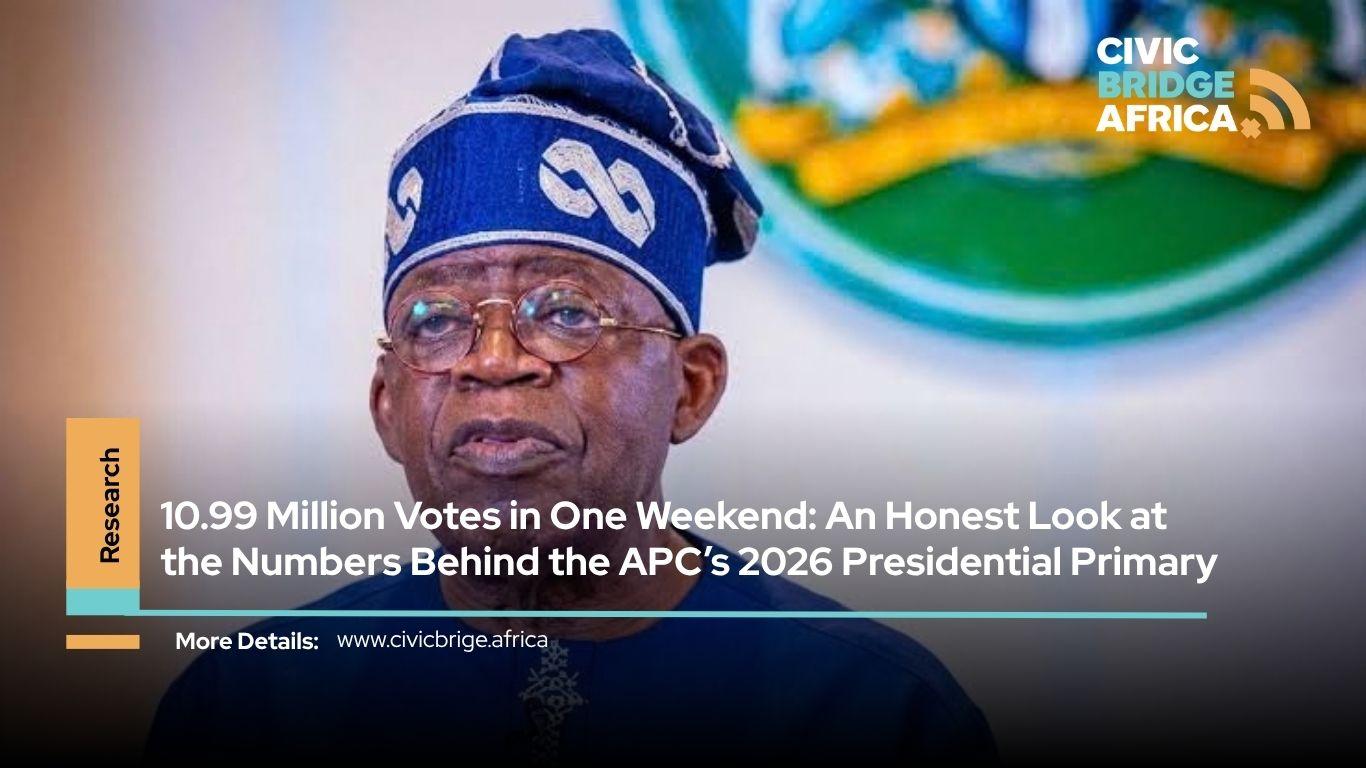
10.99 Million Votes in One Weekend: An Honest Look at the Numbers Behind the APC’s 2026 Presidential Primary
An evidence-based look at the APC’s 10.99 million primary votes, comparing the figures with Nigeria’s recent election data, APC membership claims, and state-by-state voting patterns.
What the Numbers Show
The APC reported that 11,069,756 members were accredited for the primary, with 11,015,665 votes cast. President Bola Ahmed Tinubu received 10,999,162 votes, while Stanley Osifo received 16,503.
The reported 99.5% turnout is significantly higher than the turnout recorded in Nigeria's recent general elections. In the 2023 presidential election, for example, only 26.72% of registered voters participated.
A Different Pattern Across States
The state-level figures also raise questions worth examining. In some states where President Tinubu performed poorly in the 2023 presidential election, the number of votes reported for him in the APC primary was dramatically higher.
In Enugu, for instance, Tinubu received 4,772 votes in the 2023 presidential election but was reported to have received 383,382 votes in the APC primary. Abia recorded a similar pattern, with 8,914 votes in 2023 compared with 161,005 in the primary.
The pattern was not consistent everywhere. In states such as Ekiti, the FCT and Jigawa, the number reported in the primary was lower than Tinubu's 2023 presidential vote total. These differences make the state-by-state figures important to examine rather than viewing the national total in isolation.
The Challenger's Numbers
Stanley Osifo, the only other candidate reported in the primary, received 16,503 votes nationwide. He recorded zero votes in 21 of the 36 states and the Federal Capital Territory.
This distribution is another aspect of the results that deserves closer examination, particularly when considered alongside the overall 99.5% turnout reported for the primary.
Why This Matters
This analysis is not about declaring the results genuine or fraudulent. It is about examining publicly reported figures and asking whether they align with Nigeria's broader electoral patterns.
Election numbers matter because public confidence in democratic institutions depends not only on who wins, but also on whether citizens can understand, scrutinise and trust the processes that produce those results.
Read the full Civic Explainer to explore the reported figures, state-by-state comparisons, APC membership claims, the distribution of the challenger’s votes, and the wider implications for Nigeria's democratic process.
More research
Keep reading.
 Civic Explainer
UNGA: What the Global Town Hall Means for Africa
What is UNGA and how does it actually impact Africa? Skip the diplomatic jargon. Our Civic Bridge Africa explainer breaks down how the UN General Assembly works, its major limitations, and the ongoing fight for African veto power on the Sec
 Research Report
Citizen trust and local governance in Nigeria
A 12-community study exploring how transparency, responsiveness, and inclusive service delivery shape trust in local government councils.