
Civic Explainer
UNGA: What the Global Town Hall Means for Africa
What is UNGA and how does it actually impact Africa? Skip the diplomatic jargon. Our Civic Bridge Africa explainer breaks down how the UN General Assembly works, its major limitations, and the ongoing fight for African veto power on the Sec
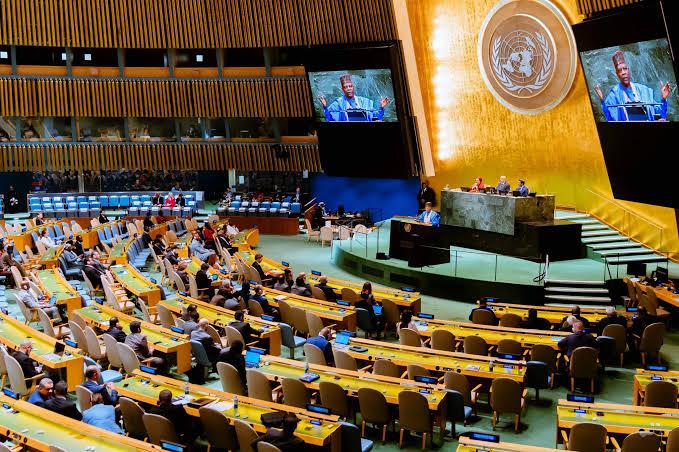
Every September, the eyes of the world turn to New York City. The United Nations General Assembly (UNGA) High-Level Week dominates global news headlines. Motorcades gridlock Manhattan as presidents, prime ministers, and diplomats gather for a marathon of televised speeches.
To the casual observer, it looks like an expensive talk shop where world leaders read rehearsed scripts to half-empty rooms. Critics frequently dismiss it as a toothless bureaucratic exercise.
But at Civic Bridge Africa, we believe that understanding global governance is a vital part of civic literacy. Look past the podium, and you will find that UNGA is a highly strategic arena where Africa’s geopolitical future is contested.
Here is your ultimate guide to how UNGA actually works, its power, its limitations, and why African leaders use its microphone to fight for continental justice.
1. What is UNGA, and what does it represent?
The UN General Assembly (UNGA) is the closest thing humanity has to a world town hall. Established in 1945 under Chapter IV of the UN Charter, it is the main policy-making body of the United Nations.
Crucially, UNGA operates on a strict democratic principle: one country, one vote.
Unlike other global institutions where wealth or military might dictates the rules, a small African nation like Gambia or Lesotho carries the exact same voting weight at UNGA as a global superpower like the United States, Russia, or China. Because of this, UNGA represents global democratic legitimacy. When a nation wants to prove that the moral consensus of the world is on its side, UNGA is where they go to count the votes.
2. Why Do Our Leaders Attend? (The Real Impact)
World leaders do not travel across the Atlantic just to stand at a podium. The true, high-stakes work of UNGA happens entirely behind closed doors, in hotel lounges, and in private meeting rooms.
Diplomatic "Speed-Dating": Bringing nearly 200 world leaders into one square mile creates unprecedented diplomatic efficiency. An African president can hold five bilateral (one-on-one) meetings with leaders from different continents in a single afternoon, a feat that would otherwise require months of expensive state travel.
Securing Sideline Deals: Billions of dollars in foreign direct investment, development loans, and trade pacts are finalized on the sidelines of UNGA. In recent sessions, African delegates have used these parallel forums to sign major green energy partnerships, secure solid-mineral development agreements, and negotiate funding for healthcare and education.
Setting the Global Narrative: UNGA is where global priorities are born. Landmark frameworks like the Universal Declaration of Human Rights and the Sustainable Development Goals (SDGs) started as UNGA declarations before trickling down to shape domestic policies and civic budgets across Africa.
3. The Machinery: How Things Get Done (and How Long It Takes)
UNGA functions through a system of specialised committees, debates, and formal votes.
The Voting Process: Routine resolutions require a simple majority vote. However, "important questions", such as admitting new member states, electing non-permanent members to the Security Council, or approving budgets, require a two-thirds majority (129 out of 193 votes).
The Long Road to a Resolution: Passing anything at the UN is notoriously slow. A proposal must first be debated within one of six specialised committees (covering topics like disarmament, economic growth, or human rights). It undergoes months of intense, line-by-line editing and diplomatic horse-trading. By the time a resolution reaches a final vote on the General Assembly floor, it has often been heavily compromised to satisfy different global factions.
The Power of the Purse: While UNGA cannot deploy armies, it controls the UN’s finances. Under Article 17 of the UN Charter, the General Assembly votes on and approves the entire UN operating budget. Without UNGA funding, the UN’s massive peacekeeping operations on the African continent cannot function.
4. The Grand Illusion: Major Limitations
The most important thing citizens must understand about UNGA is its primary structural flaw: UNGA cannot pass binding international laws.
Recommendations, Not Laws: UNGA resolutions carry immense moral and political weight, but they lack legal teeth. They are recommendations. If a country violates a UNGA resolution, the assembly cannot send troops or enforce economic sanctions to stop them.
The Shadow of the Security Council: Ultimate enforcement power lies exclusively with the 15-member UN Security Council (UNSC). While UNGA represents the democratic majority, the Security Council dictates hard geopolitical actions. If UNGA votes overwhelmingly to condemn an act of aggression, but one of the five permanent Security Council members (the P5: US, UK, France, Russia, China) uses their veto power, the entire United Nations is effectively paralyzed.
5. The African Voice: Confronting Historical Injustices
For decades, African leaders have used the UNGA podium not just to conform to global diplomacy but to shake the global conscience.
Calling Out "The Greatest Crimes"
Historically, the UNGA microphone has been a tool for African liberation and truth-telling. Pioneers of African independence and successive heads of state have used their time at the podium to fiercely condemn colonialism, apartheid, and the transatlantic slave trade as some of the greatest crimes against humanity.
African leaders have consistently argued that the modern wealth of the Global North was built on the systematic exploitation and deliberate impoverishment of Africa. At UNGA, they use this history to demand global financial restructuring, climate justice, and debt cancellation, framing them not as "foreign aid" or charity, but as historical reparations.
The Modern Battle: Veto Power and Security Seats
In recent high-level sessions, the African narrative at UNGA has shifted from historic grievance to a direct demand for structural power. Led by nations like Nigeria, and strictly aligned with the African Union’s Ezulwini Consensus and Sirte Declaration, the continent has issued a clear ultimatum to the international community: Reform the system, or face irrelevance.
The Demand: Africa is demanding at least two permanent seats with full veto power, alongside an expansion to five non-permanent seats, on the UN Security Council.
The Core Argument: The UN’s current power structure is a relic of 1945, a time when most of Africa was under colonial rule and entirely absent from the room. Today, Africa represents over 1.4 billion people and constitutes the largest regional voting bloc at the UN, with 54 member states. Yet, the continent has zero permanent representation on the council that decides global peace and security. This is despite the fact that the vast majority of UN peacekeeping missions and security interventions take place on African soil.
Civic Takeaway: Why UNGA Matters to Us
The United Nations General Assembly is flawed, heavily bureaucratic, and often painfully slow. Yet, for Africa, it remains an irreplaceable platform. It is the only global arena where a unified African continent can look the global superpowers in the eye and demand structural equality.
When African leaders stand at the UNGA podium to demand veto rights and fair financial systems, they are signalling that the global status quo of 1945 can no longer hold our future captive. For civic actors across the continent, tracking UNGA is how we hold our leaders accountable for the promises they make on the world stage and how we measure Africa's rising influence in shaping a fairer world.
Civic Bridge will continue to break down complex global governance systems into accessible insights that drive civic action across the continent.
More research
Keep reading.
 Civic Explainer
10.99 Million Votes in One Weekend: An Honest Look at the Numbers Behind the APC’s 2026 Presidential Primary
An evidence-based look at the APC’s 10.99 million primary votes, comparing the figures with Nigeria’s recent election data, APC membership claims, and state-by-state voting patterns.
 Research Report
Citizen trust and local governance in Nigeria
A 12-community study exploring how transparency, responsiveness, and inclusive service delivery shape trust in local government councils.